What are the oxygen delivery methods for home mild hyperbaric oxygen chambers?
- Share
- Issue Time
- Nov 10,2026
Summary
What are the oxygen delivery methods for home mild hyperbaric oxygen chambers?

### 1. Nasal Cannula / Nasal Prong Oxygen Therapy
Soft tubing is delivered to the nasopharynx, or plastic nasal prongs are placed at the nasal vestibule for oxygen supply. It is easy to apply and comfortable to wear, making it the most widely used oxygen delivery method for home use.
When used under normal atmospheric pressure, the oxygen flow rate generally does not exceed 6 L/min, and the fractional inspired oxygen concentration is mostly below 50%.
Features: The inspired oxygen concentration is not stable, affected by the user’s tidal volume and respiratory rate. Deep and slow breathing yields a higher inspired oxygen level; shallow, rapid breathing or mouth breathing lowers the oxygen concentration.
In addition, excessively high flow may irritate the nasal mucosa and cause discomfort. Models with small diffuser holes at the tubing end can spread airflow and reduce impact. Compared with nasal cannulas, nasal prongs cause less irritation to the nasal mucosa.
Reference formula for normal atmospheric pressure (for rough estimation only for nasal cannula / nasal prongs at ambient pressure; not valid under pressurized hyperbaric chamber conditions):
FiO₂ (%) = 21 + 4 × oxygen flow rate (L/min)
>
> Note: FiO₂ = Fraction of Inspired Oxygen
---
### 2. Mask Oxygen Therapy (including oxygen hoods, suitable for pairing with home oxygen chambers)
Oxygen is delivered via a soft oronasal mask. It provides relatively stable oxygen concentration and is more comfortable than nasal cannulas. However, masks carry dead space, leading to higher oxygen consumption.
Common types:
(1) Simple Mask
Oxygen enters from one side, and exhaled gas escapes through gaps around the mask. To reduce rebreathing of carbon dioxide, the oxygen flow rate is recommended to be no less than 4 L/min. A flow of 12–15 L/min is typically required to achieve 40%–50% FiO₂. This is the mainstream mask type matched with home hyperbaric oxygen chambers.
Other delivery methods (more clinically specialized):
(2) Venturi Mask: fixed-concentration oxygen mask. High-speed oxygen jet creates negative pressure to entrain ambient air for oxygen dilution. By adjusting the air inlet, FiO₂ can be stably maintained at 24%–40% (common preset levels: 24%, 28%, 35%, 40%). The concentration barely fluctuates with breathing depth or rate, ideal for users requiring stable low-concentration oxygen supply.
(3) CO₂ Rebreathing Mask: consists of a mask and an oxygen reservoir bag, with no one-way valve between the mask and bag. Exhaled carbon dioxide mixes with incoming oxygen. It delivers low oxygen concentration and elevated CO₂ levels. Some sources suggest high CO₂ may facilitate vasodilation, yet FiO₂ is difficult to regulate precisely. The risk of discomfort from excess carbon dioxide cannot be ignored, so this type is rarely used at home.
(4) Non-Rebreather Mask (reservoir mask with one-way valves): paired with an expandable oxygen reservoir bag and fitted with one-way valves. Oxygen accumulates inside the bag during exhalation; the user inhales high-purity oxygen directly from the bag, allowing delivery of nearly pure oxygen.
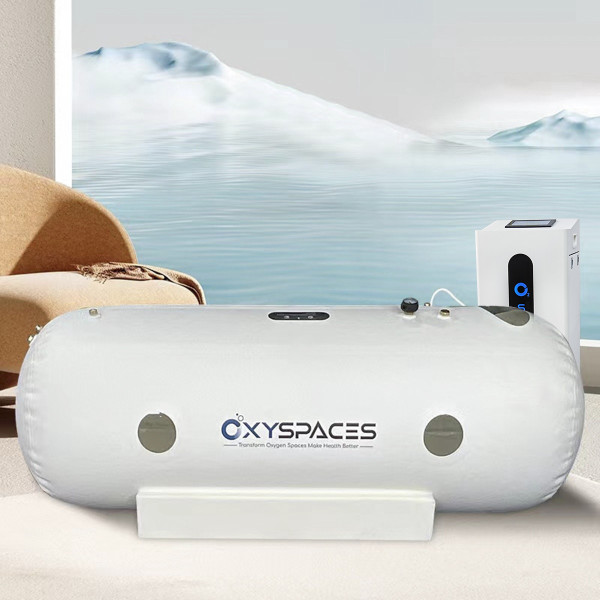
Lying Type Hyperbaric Chamber has circular viewing windows and one oval viewing window for easy communication with the outside
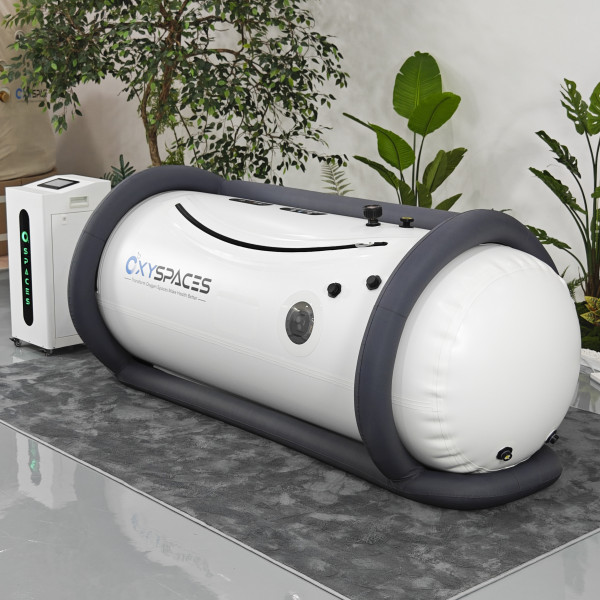
Lying Type Hyperbaric Chamber has circular viewing windows and one oval viewing window for easy communication with the outside
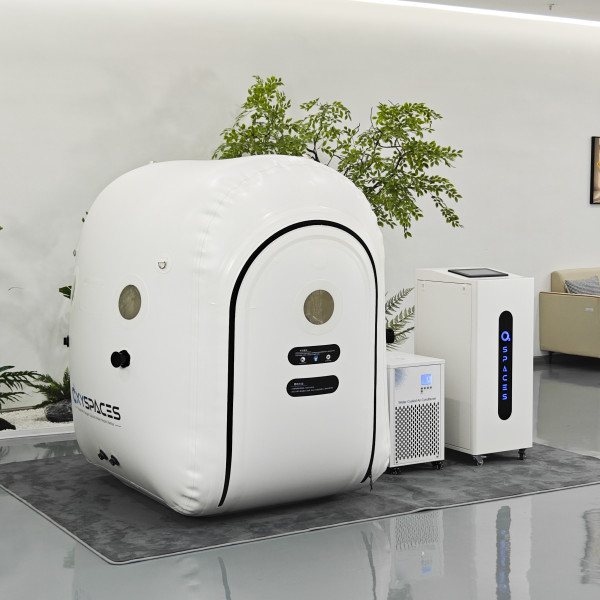
The research of the multi-functional hyperbaric chamber is to facilitate the elderly or disabled with inconvenient legs.
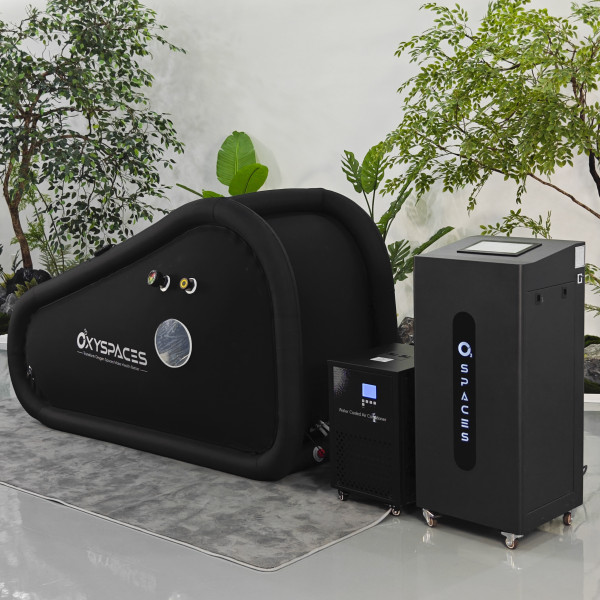
Experience the Quality of OXY SPACES S-190C Hyperbaric Chambers - Flexible Solutions for Global Clients.